How to Play Pusoy Dos: A Filipino Beginner's Guide
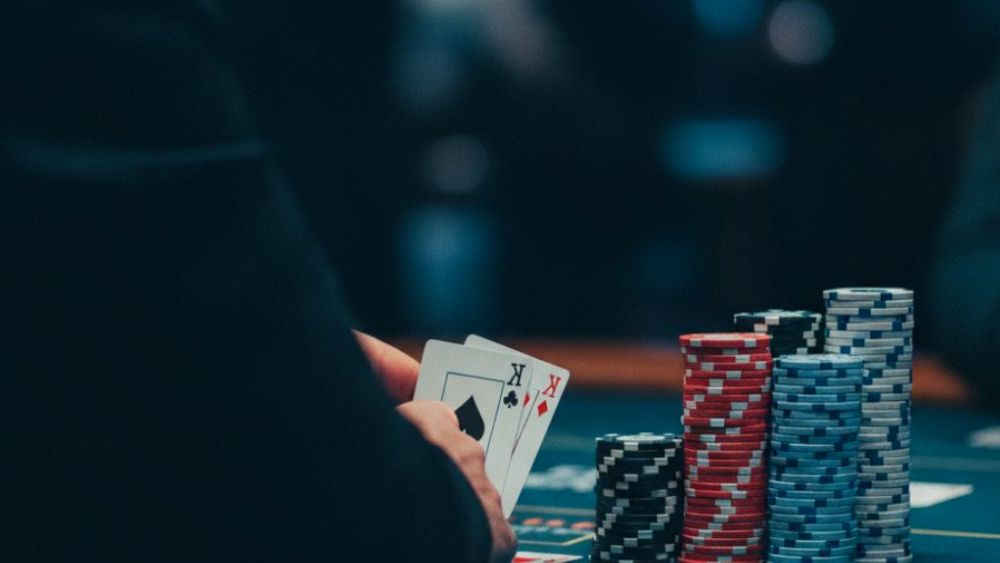
How to Play Pusoy Dos: Your First Deal
To learn how to play pusoy dos, deal all 52 cards evenly to four players, 13 each, so every player empties their hand in one sitting. The lowest card in play is the 3 of clubs under the Philippine order clubs < spades < hearts < diamonds, and that holder leads first. Ranks run 3, 4, 5 up to A, with the 2 as the highest card. You win the round by being the first to shed all 13 cards. That is the whole spine of the game; everything else is hand types and table rules.
GameZone and Cardems both publish that suit hierarchy, which is why a 3 of clubs opens here while a Western poker table would start from a 2. Treat the opening card as a visible marker: whoever holds it plays it, and the round rotates from there.
The deal and the order of play
- Shuffle, cut, and deal 13 cards face down to each of four seats.
- Find the 3 of clubs. That player leads the first trick with it, either alone as a single or inside a legal combination containing it.
- Play moves clockwise in most local versions; some apps reverse it, so confirm the table direction before the first hand.
- Each following player must beat the current play with the same hand type and the same number of cards, or pass.
- When three players pass, the last player to play wins the trick and leads the next one.
- The first player with an empty hand wins. Losers score their remaining cards.
Beginners lose more hands to bad combinations than to bad luck, so learn the five hand shapes before worrying about scoring.
The Hand Types You Can Actually Play
Pusoy dos has five playable shapes. A single beats a lower single, a pair beats a lower pair, three of a kind beats a lower set, and a five-card hand beats a lower five-card hand of the same category.
- Single: one card.
- Pair: two cards of the same rank, different suits.
- Three of a kind: three of the same rank.
- Five-card hands: straight, flush, full house, four of a kind plus a kicker, or a straight flush.
Straights are where local rules split. Many Philippine tables allow a straight containing the 2, so J-Q-K-A-2 is legal and sits above 10-J-Q-K-A; other providers forbid it. Flush comparison is the second split. Some tables rank suits first and then the highest card; others compare only the top card of each flush. Settle both points before dealing, because a disagreement over a flush can sour a whole session.
Worked example: when to hold and when to dump
Suppose you are dealt 3♣ 3♠ 4♥ 5♦ 6♣ 8♠ 8♥ 9♦ 10♣ J♠ Q♥ K♦ A♠. Your hand has a pair of 8s, a pair of 3s, and a straight of 3-4-5-6 plus a stray 7 that is not there, so the straight does not exist. You do have a 3-4-5-6-8 run only if you borrow the 7 from nowhere, which you cannot. The discipline here is to lead the pair of 3s early, keep the 8s as a control pair, and avoid burning the A or K as singles until the table has shown its high cards. A beginner who leads the A first wins one trick and then loses control for the rest of the hand.
A good pusoy dos hand is not the one with the most high cards; it is the one you can empty in the fewest tricks.
Common Mistakes That Cost Beginners Money
The most expensive error is playing a weak five-card hand early. A low straight such as 3-4-5-6-7 is easy to beat with any higher straight or any full house, and once you have committed five cards, your remaining eight are usually too fragmented to regain the lead. Save five-card plays until they are likely to hold.
The second mistake is treating the 2 as a low card out of poker habit. In pusoy dos the 2 outranks the A, so a 2 of clubs beats an A of diamonds as a single. Players who fold the 2 into a straight early often regret it.
Third is ignoring the pass. Passing is information: if two players pass on a single, the third is either holding a higher single or setting a trap. Track what has been played, especially the 2s and the aces.
Fourth is misreading the suit order. Diamonds are strongest in the Philippine order, clubs weakest. On a flush comparison, the diamond flush wins over a spade flush even if the spade flush has a higher top card, depending on the table's rule. Ask once, then play consistently.
A practical pre-hand checklist
- Confirm turn direction and whether straights may contain the 2.
- Confirm whether flushes are compared by suit first or by top card.
- Agree the scoring method before the first deal.
- Agree the stake per point or per hand, and the settlement currency.
- Set a session cap in pesos and stop when you reach it.
Where the Rules Diverge Online in 2026
Live tables and online rooms do not run identical rules, and that matters more than most guides admit. Turn order, straights containing the 2, flush comparison, and scoring are all provider-specific. GameZone's pusoy dos page and Cardems' game page describe their own versions, and neither should be assumed to match a neighborhood table in Cebu or a card room in Manila. Neither provider is an advertising partner of Bayan Hub, and nothing here is a login, download, or deposit instruction for either brand.
Scoring is the biggest practical difference. Some rooms count points by remaining cards with multipliers for cards above 10, and a common structure is 1 point per card worth 3 to 10, 5 points for J, Q, and K, and 10 points for the A and 2. Others use a flat rate per losing hand. A flat 1x rate on a ten-point hand is cheap; a 3x multiplier on twos and aces can turn one bad hand into a twenty-point swing. Read the room's scoring screen or printed rules before you buy in.
Platforms typically set a minimum deposit around PHP 200 to PHP 500, apply a 1x to 3x wagering requirement on bonus credits, and process withdrawals in 15 minutes to 24 hours for e-wallets such as GCash and Maya, with bank transfers taking one to three banking days. VIP tiers usually start at a lifetime turnover near PHP 50,000 for the first level and step up in bands toward PHP 1,000,000, with cashback multipliers of 0.5% to 2% on qualifying turnover. These are typical industry figures, not published terms for any single brand, so match them against the operator's own schedule.
Licensing is the other check. Philippine-facing operators generally display a PAGCOR licence, and a legitimate room prints the licence number and the regulator's seal on its footer. If a room hides that detail, treat the table as entertainment only and keep your deposit small.
Bankroll and Table Discipline for New Players
Pusoy dos is a skill game, but variance is real, and no pattern of bets changes the odds of a shuffled deck. What you control is the size of your exposure. A sensible starting bankroll is 20 to 30 buy-ins at the minimum table stake, so a PHP 100 minimum buy-in implies a PHP 2,000 to PHP 3,000 bankroll. If you play PHP 10 per point, a losing hand of 15 points costs PHP 150; three of those in a row is PHP 450, which is why an 8x to 10x buy-in cushion matters.
Set a session stop at three buy-ins and a time stop at 90 minutes. Beginners who chase hands after midnight make the same mistakes as tired poker players: they overplay five-card hands, forget the suit order, and pass when they should lead. Keep a simple log of hands won and lost by category for your first ten sessions. You will see quickly whether your losses come from weak straights or from holding aces too long.
Finally, keep stakes proportional to disposable income. The table is entertainment first, and no hand is worth a bill you cannot cover.
Frequently Asked Questions
What is the lowest card in pusoy dos?
Under the Philippine suit order clubs < spades < hearts < diamonds, the lowest card is the 3 of clubs, and that holder leads the first trick. Ranks run from 3 up to A, with the 2 as the highest card.
Can a straight contain a 2 in pusoy dos?
It depends on the provider. Many Philippine tables allow J-Q-K-A-2 as a straight above 10-J-Q-K-A, while other rooms forbid any straight containing the 2. Agree the rule before the first deal.
How many cards does each player get in pusoy dos?
In the standard four-player setup, all 52 cards are dealt evenly, so each player receives 13 cards. The round ends when one player empties their hand.
How is pusoy dos scored?
Scoring varies. A common structure gives 1 point per card from 3 to 10, 5 points for J, Q, and K, and 10 points for the A and 2, sometimes with multipliers on high cards. Some rooms use a flat rate per losing hand instead.